Beyond Firewalls™ Truly Protected. Never Isolated.
Data Diode Network Segmentation combined with unique Proxy Software
— Real world usability without compromise on security
Hardware-Enforced
Security
Firewalls rely on software and configuration that require continuous updates, remain remotely modifiable by design, and are regularly exposed to CVEs or Zero-days.
By enforcing network segmentation in hardware, software-based controls are removed from the security boundary, delivering a physically enforced isolation that cannot be altered remotely.
Strictly One-Way
Communication
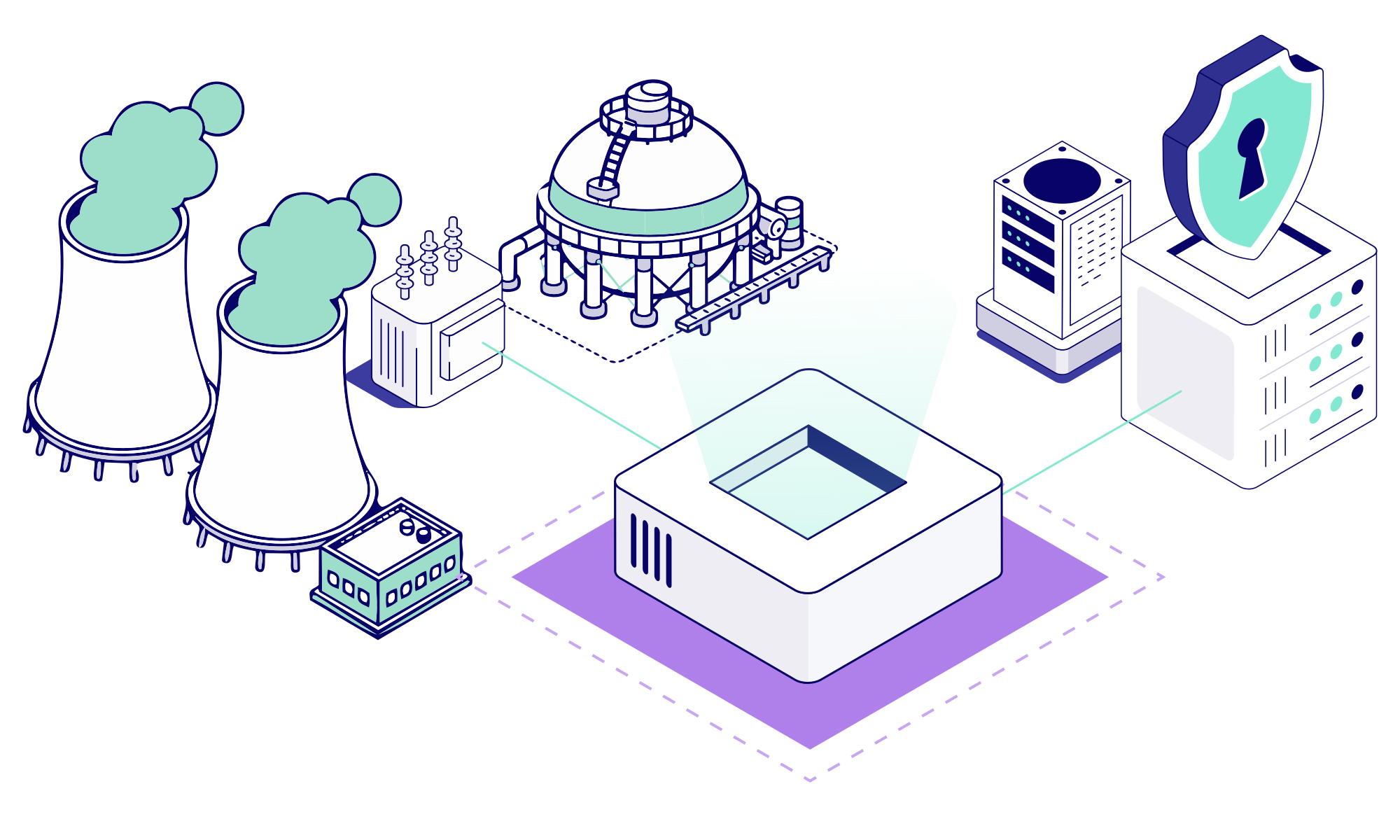
True one-way communication is designed for the most critical and regulated environments — Defense and Government, Energy, Nuclear or Transportation — where absolute domain isolation is mandatory.
Because not all unidirectional gateways provide the same level of assurance, only physically enforced and strict unidirectionality aligns with international standards and regulatory frameworks, including NIST guidance, IEC/ISA-62443, ENISA recommendations, NIS2 and NERC CIP.
Software Flexibility
Without Compromise
True unidirectionality does not have to mean operational isolation: by combining hardware-enforced network segmentation with protocol-aware software, critical environments remain strictly protected while enabling reliable, flexible and usable data transfers across domains.
Designed for the Most Demanding Environments
Critical OT & Industry 4.0
Unhackable OT-to-IT data transfer preventing attacks on critical industrial operations
Government & Defense
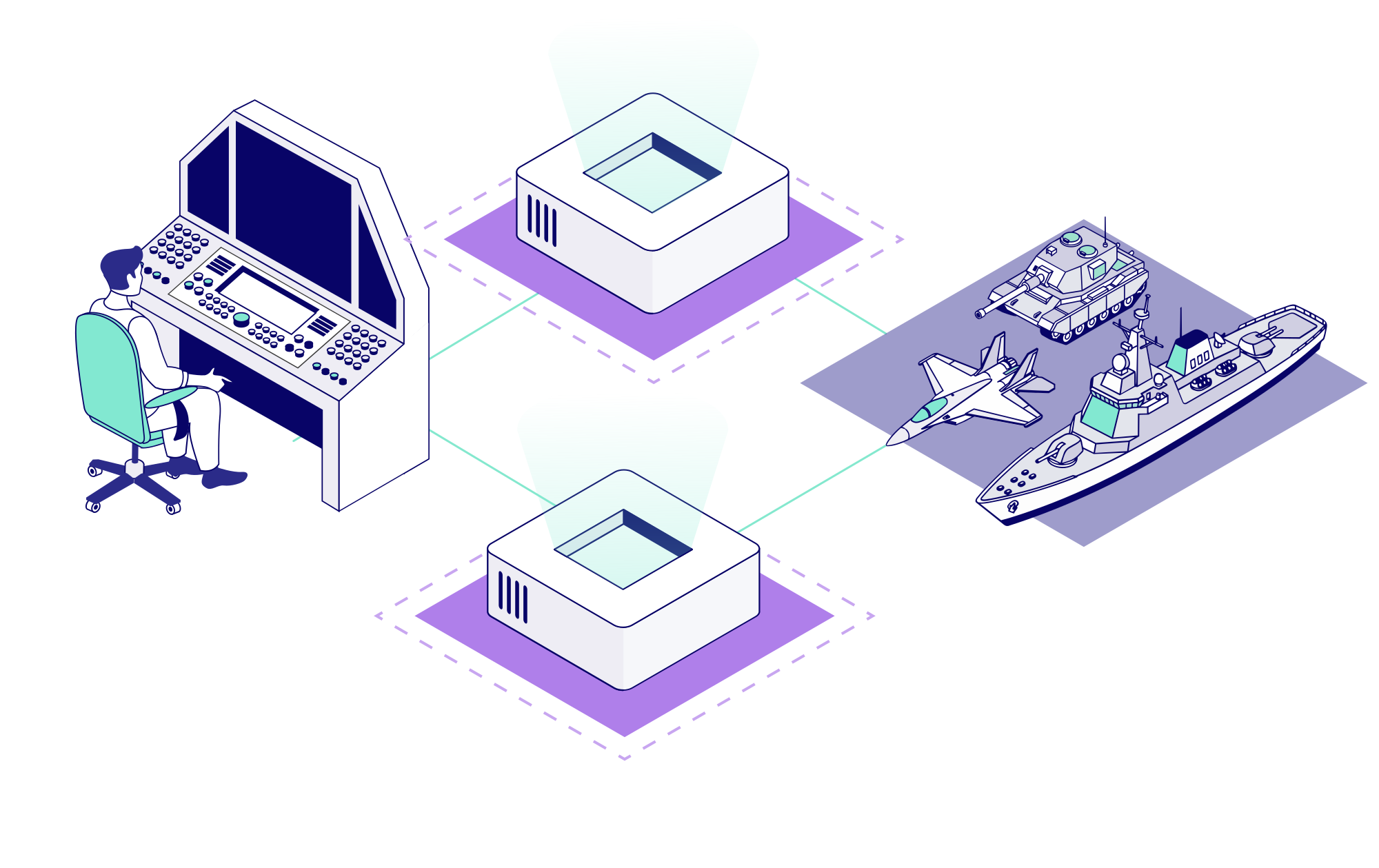
Secure cross-domain data transfer protecting classified assets from leakage and unauthorized access
Corporate & Private Clouds
Secure cross-domain data transfer reducing attacker’s leverage by protecting backups and sensitive assets
Built for High-Stakes Operations
Proven Protection, at Speed.
Throughput is easy to claim. End-to-end encrypted file transfer is harder to deliver.
Our unique performance figures reflect real-world, measured bandwidth — not laboratory optical rates.
Powered by Cyberium’s high-performance proxy stack, independent of the underlying diode.
FAQ
Do I really need unidirectional communication?
Unidirectional architecture is not intended for all environments: it is designed for systems where a remote breach would have systemic or strategic consequences.
Defense systems, nuclear facilities, energy production sites, utilities, transportation networks, and sovereign infrastructures often require structural separation between security domains, which is also reflected in guidance from major cybersecurity authorities. For example, NIST and ENISA highlight the security value of one-direction gateways for strict domain separation, and ICS-focused security assessments from DHS recommend them in high-risk industrial contexts.
Air-gapped networks are often used to reduce exposure. However, air-gapping can introduce inefficiencies, manual data transfers, operational delays, and increased human risk. Unidirectional technology restores controlled data exchange for monitoring, reporting, backups, or analytics, while physically preventing inbound paths — and standards such as ISA/IEC 62443 explicitly emphasize the value of limiting malicious code propagation across zones.
In highly regulated environments, one-way enforcement can also simplify perimeter security arguments: the U.S. NRC/NEI and NERC-related references in sector documentation highlight that, in specific protected-site contexts, a significant share of cyber boundary requirements may be reduced when one-direction technology is used appropriately.

Why go beyond firewall-security?
Firewalls remain essential components of modern cybersecurity architecture. They inspect traffic, enforce policies, and detect anomalies.
Yet firewalls are software systems. They rely on configuration, firmware integrity, patch cycles, and constant vigilance. As threat actors become more sophisticated, vulnerabilities, misconfigurations, and novel exploit techniques remain ongoing risks.
Hardware-enforced segmentation complements traditional perimeter defenses by removing the inbound attack path entirely. Rather than attempting to filter malicious traffic, it eliminates the possibility of inbound traffic at the most critical boundary.

In high-assurance environments, removing the attack surface can provide greater long-term confidence than continuously defending it.
What is a Data Diode ?
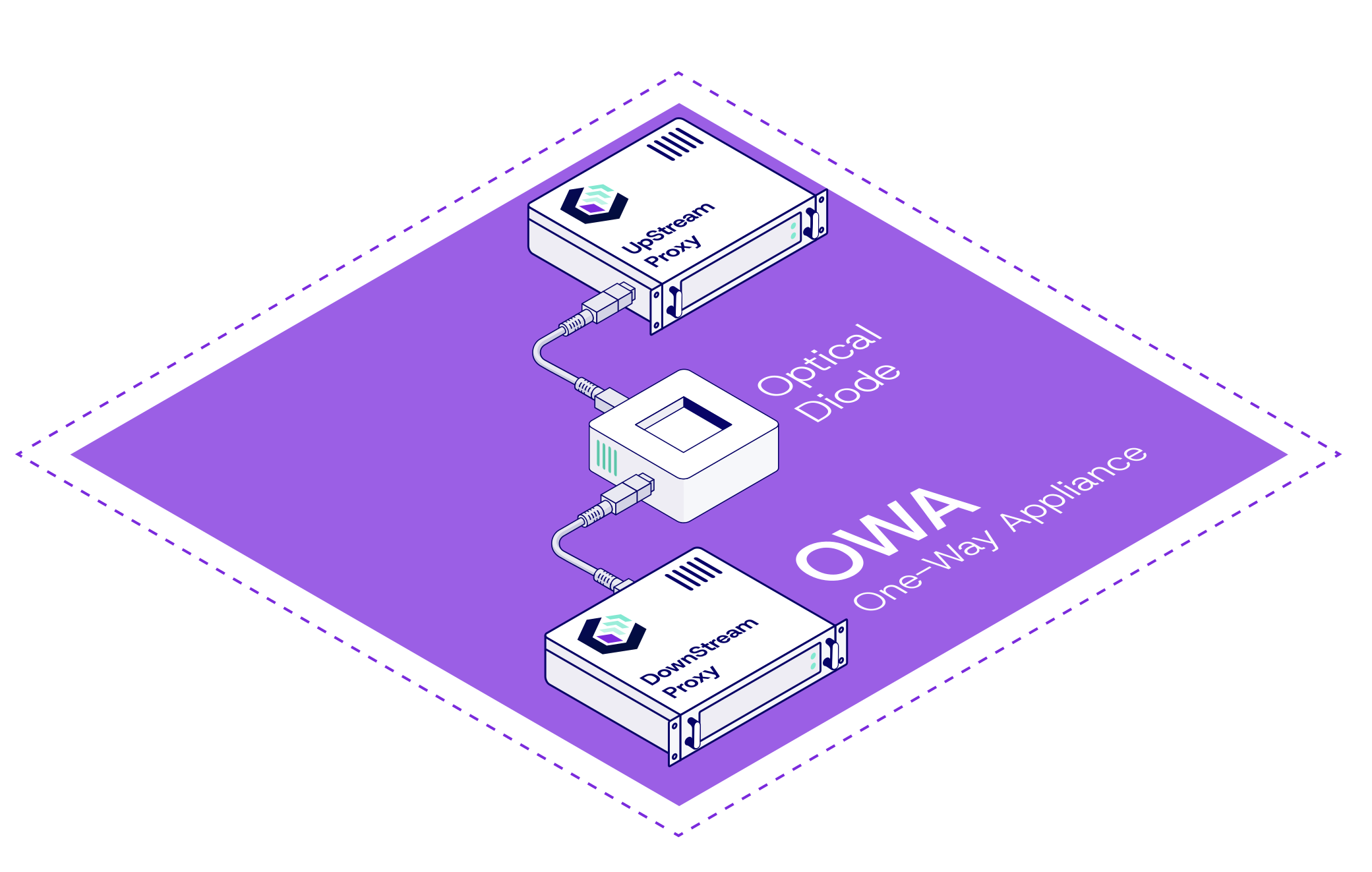
A true optical Data Diode is an optical hardware device compound of three elements: an upstream transceiver/receiver, an optical isolator (the diode itself), and a downstream receiver. They guarantees one-way communication through the following essential architectural principles:
First, unidirectional light flow is enforced by design: the optical core is asymmetrical, with one side transmitting and the other receiving, meaning no reverse transmission interface exists within the path.
Second, the optical core is engineered so that any reflected or backward light is attenuated below detectable levels (typically greater than 40 dB), preventing the creation of a covert return channel.
Third, full galvanic isolation is achieved through electro-optical conversion, as data is converted from electricity into light and back again (TX → light → RX), eliminating any shared electrical path between networks.
Unidirectionality is therefore not a configuration setting or a software rule — it is a structural property of the hardware.
Are all Data Diodes essentially the same?
They are not.
Some solutions marketed as “Data Diodes” still contain bidirectional network components internally or rely on software enforcement to restrict reverse communication. Others include management or control channels that traverse the same boundary they are intended to protect.
In these cases, unidirectionality may be conditional rather than structural.
A truly unidirectional device is physically incapable of transmitting data in reverse. It cannot be remotely reconfigured to allow inbound traffic because there is no physical channel available to do so.
When protecting critical systems, the distinction between configured one-way communication and physically enforced one-way communication is fundamental.
If the diode is one-way, how do applications still function?
A Data Diode enforces physical one-way transport. On its own, it does not interpret industrial protocols, file structures, or application logic.
To enable real-world application flows across a strictly one-way boundary, dedicated proxy technologies — such as Cyberium’s mission-grade proxy architecture — are deployed on each side of the diode. These proxies adapt communication patterns, replicate data, preserve integrity, and maintain operational continuity without ever reintroducing an inbound path.
The security guarantee comes from the optical isolation layer. Proxies provide operational functionality — protocol adaptation, buffering, session emulation — but they do not replace or weaken the physical unidirectionality.
Depending on the architecture, they may also integrate filtering, content inspection, or antivirus capabilities, adding functional control while preserving structural isolation.
How can I enquire about Cyberium protection solutions?
Cyberium solutions are delivered through a trusted network of certified integrators and cybersecurity partners, ensuring alignment with operational, regulatory and sovereign requirements.
Engagement typically starts with a structured technical discussion to define the security boundary to be enforced, map required data flows, and assess compliance constraints. Based on this analysis, a tailored architecture is proposed in coordination with the appropriate partner.
Given the critical nature of protected environments, deployments are designed to fit mission and operational realities. Proof-of-concept or pilot phases are often conducted before full-scale implementation.
If you are evaluating hardware-enforced network segmentation or cross-domain isolation, our team can guide you through the appropriate engagement path.
Get in touch
Connect directly with a network segmentation expert
to discuss your security architecture and use cases
Latest blog entries
- Category 03
- Defense
- Category 02
- Cloud
- Category 01
Protected by our solutions